

Finding time to hit the gym can be challenging in our busy lives. Personal training at home offers a convenient and effective solution to stay fit and healthy. This comprehensive guide will cover the world of in-home personal training, its benefits, and how to make the most of your home fitness journey.
Key Takeaways
- Personal training at home brings a certified trainer’s expertise, equipment, and a customized workout plan directly to your living space, no gym commute required.
- Basic equipment like resistance bands, dumbbells, and a yoga mat can enhance sessions, but a dedicated room isn’t necessary.
- Before booking, confirm the trainer’s service radius, travel fees, and rescheduling policy for weather or traffic delays.
- Sessions can be one-on-one, partner-based, small group, or virtual, giving you flexibility based on your goals and space.
- Home training works especially well for busy professionals, parents, and anyone who prefers a private, flexible fitness setting over a traditional gym.
What is Personal Training at Home?
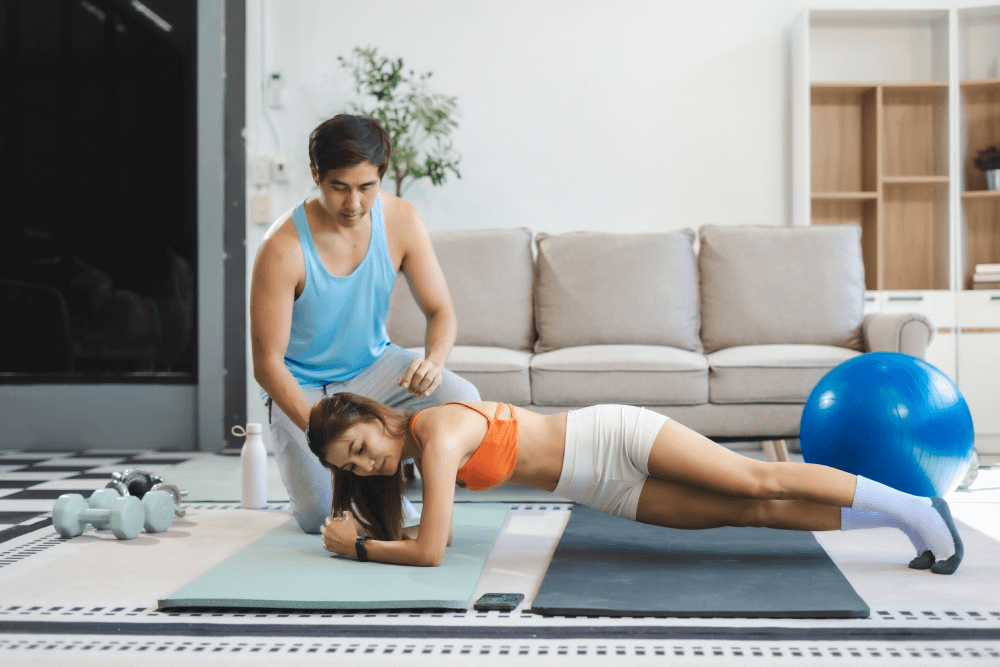
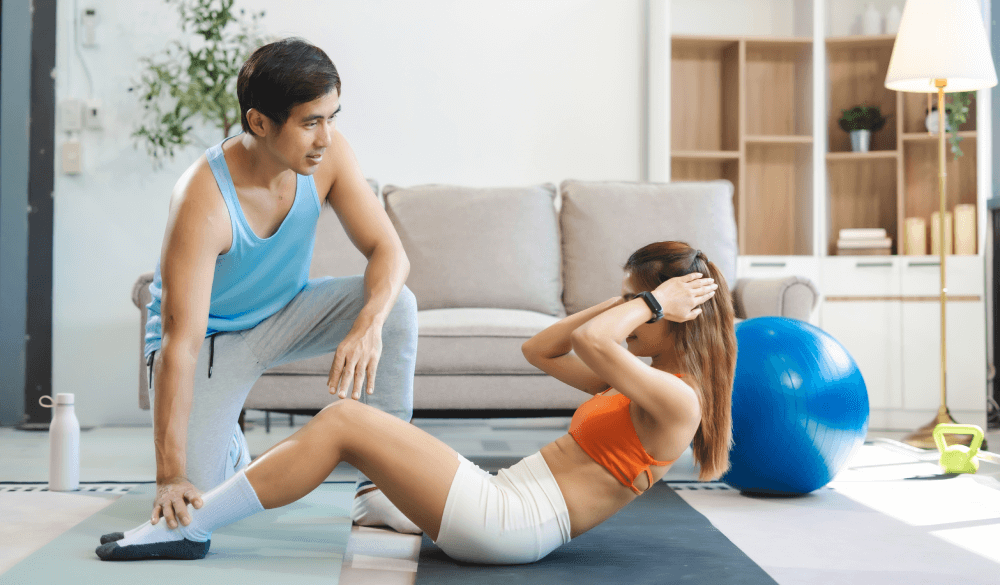
Personal training at home involves working with a fitness professional in the comfort of your own living space. An in-home personal trainer brings their expertise, equipment, and personalized workout plans directly to you, eliminating the need for gym visits and providing a tailored fitness experience.
Is training away from a gym actually as effective? The evidence is reassuring on this point: a 2024 randomized clinical trial found that remote, video-supervised training produced body-composition and metabolic outcomes comparable to in-person supervised training in physically inactive adults (randomized clinical trial, 2024). Supervision and progressive programming appear to matter more than the room you train in or the equipment on the wall — which is the case for in-home coaching, and also the honest limit of it: you still need appropriate loading, and at some point heavy strength work needs equipment you may not own. Industry evidence on supervised training more broadly also supports better adherence and technique with a coach than training alone (ACE: evidence supporting the effectiveness of personal training).
Benefits of Home Personal Training
- Convenience: No commute to the gym means more time for your workout.
- Privacy: Exercise without feeling self-conscious in a public setting.
- Personalized attention: Your trainer focuses solely on you during the session.
- Customized environment: Workouts are designed around your available space and equipment.
- Flexible scheduling: Easier to fit sessions into your busy lifestyle.
- Family involvement: Opportunity to involve family members in your fitness journey.
Setting Up Your Home Gym
While a personal fitness trainer at home can bring equipment, having some basics can enhance your workouts:
- Resistance bands
- Dumbbells or kettlebells
- Yoga mat
- Stability ball
- Jump rope
- Foam roller
Remember, you don’t need a dedicated room for your home gym. A small corner in your living room or bedroom can suffice for effective workouts.
Finding the Right In-Home Personal Trainer
Choosing the right personal trainer for in-home sessions is crucial for your fitness success. Consider the following:
- Certifications and qualifications
- Experience with in-home training
- Specializations (e.g., weight loss, strength training, rehabilitation)
- Personality and communication style
- Availability and scheduling flexibility
- Client testimonials and reviews
For those in the Tacoma area, consider private personal training options that offer in-home services.
Service Area and Booking Logistics
If you’re working with a local provider, it helps to understand service logistics before booking.
- Confirm the service radius, since many in-home trainers only travel within a set distance from their base location
- Ask whether travel fees apply for locations outside a standard zone
- Clarify how much advance notice is needed to book or reschedule a home session
- Ask what happens if the trainer needs to reschedule due to travel issues like weather or traffic
Types of Home Personal Training Sessions
- One-on-One Training: Focused, personalized attention from your trainer.
- Partner Training: Work out with a friend or family member for added motivation.
- Small Group Training: Turn your living room into a mini fitness class.
- Virtual Training: Connect with your trainer via video call for guided workouts. To understand the technology that powers these remote sessions including features for progress tracking, program delivery, and video form correction read our complete guide to Personal Training Apps.
Maximizing Your Home Personal Training Experience
- Communicate clearly with your trainer about your goals and preferences.
- Create a dedicated workout space, even if it’s just a corner of a room.
- Stick to a consistent schedule to build a routine.
- Be open to trying new exercises and techniques.
- Track your progress to stay motivated.
- Combine your training with proper nutrition for optimal results.
For nutrition guidance, consider working with a nutrition coach to complement your fitness routine.
Overcoming Challenges in Home Personal Training
- Limited space: Work with your trainer to design workouts suitable for your area.
- Distractions: Set boundaries with family members during workout times.
- Lack of equipment: Use bodyweight exercises or invest in versatile, compact equipment.
- Motivation: Schedule regular sessions and set achievable goals to stay on track.
The Future of Personal Training at Home
As technology advances, we can expect to see more innovations in home personal training:
- Virtual reality workouts
- AI-powered training programs
- Smart home gym equipment
- Enhanced remote monitoring capabilities
For those interested in cutting-edge fitness solutions, online fitness and nutrition coaching options combine technology with personalized guidance.
Home Training vs. Gym Training: A Side-by-Side Comparison
| Factor | Personal Training at Home | Training at a Gym |
|---|---|---|
| Privacy | Full privacy, no self-consciousness in a public setting | Shared floor space with other members |
| Commute | None – the trainer comes to you | Travel time to and from the gym |
| Equipment access | Limited to what you own or your trainer brings | Full range of machines and free weights |
| Cost | Often includes a travel fee on top of the session rate | Membership fee plus a separate trainer rate |
| Scheduling | Flexible around your household routine | Bound by gym hours and equipment availability |
| Family involvement | Easy to include a partner or family member | Requires separate memberships and logistics |
| Best for | Busy parents, beginners, and anyone who prefers a private setting | Those who want equipment variety or a community atmosphere |
What Beometry Clients Say
Personalized, one-on-one coaching — whether at home, in-studio, or virtual — is what our clients consistently point to as the difference-maker:
“During my initial assessment Isaac asked me questions that doctors had never even asked me before… His personalized programs and not one-size-fits-all programs won me over.”
— Kay D., Beometry client
“What I found quickly was that Beometry was the only place that asked you to come in for a consultation before just taking your money on a program… Besides going from 227 pounds to 198 pounds, the biggest difference is I literally feel 20 years younger.”
— Young J., Beometry client
Is Personal Training at Home Right for You?
Home personal training can be an excellent option for many individuals, including:
- Busy professionals with limited time
- Parents who can’t easily leave the house
- Those who feel uncomfortable in gym settings
- People with specific health concerns requiring personalized attention
- Individuals looking for a more flexible fitness solution
Remember, the key to success in any fitness journey is consistency and dedication. Whether you choose personal training at home or another fitness approach, the most important factor is your commitment to your health and wellness goals.
Medical Disclaimer: This article is for informational purposes only and does not replace professional medical advice. Consult your healthcare provider before making any health decisions.