

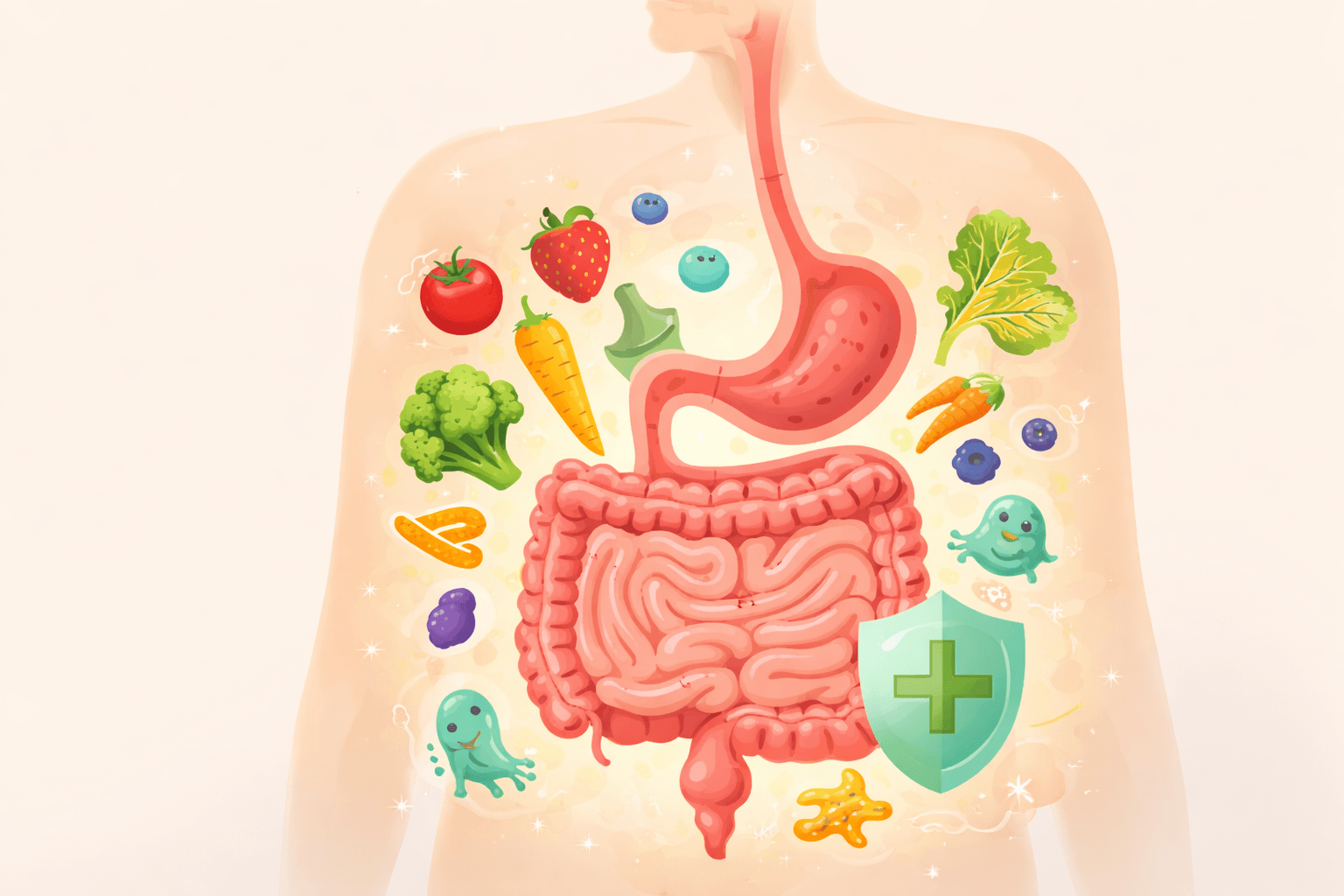
Key Takeaways:
- Gut health affects how your body uses food. Proper digestion helps the body absorb the nutrients it needs for energy, metabolism, and recovery.
- Diets alone don’t determine results. Two people can eat the same foods but experience different outcomes depending on how well their digestive system functions.
- The E.A.T. system explains the process simply. Educate yourself about nutrition, support nutrient absorption, and build habits that allow digestion to work properly.
- Stress can disrupt digestion. When the body stays in a constant stress state, digestion and nutrient absorption may become less efficient.
- Simple habits support better gut health. Eating whole foods, chewing properly, maintaining regular meals, and supporting recovery can improve digestion over time.
- Long-term health starts with digestion. Supporting gut health helps the body absorb nutrients efficiently and maintain steady energy and overall wellbeing.
Most people trying to improve their health begin with the same step: changing their diet.
They reduce calories, cut certain foods, or try a structured plan that promises better results. Sometimes it works for a while. But eventually many people notice the same problems returning – low energy, bloating after meals, or feeling like their body just isn’t responding the way it should.
At that point, the common reaction is to try another diet.
But the real issue often isn’t the diet itself.
It’s how the body processes food.
Understanding digestion and gut health changes the way we think about nutrition. When the body can properly break down food and absorb nutrients, everything from energy levels to metabolism tends to work more smoothly.
A Personal Journey That Changed the Way Nutrition Was Viewed
For many people working in health and fitness, the interest in nutrition starts with personal experience.
Isaac (Founder of Beometry) grew up with constant health issues – digestive problems, infections, allergies, and recurring illness. Despite being active and training regularly, he often felt unwell.
He describes himself as “the sickest fit person you would know.”
Later, when his young son began experiencing eczema and similar health challenges that had appeared across generations in the family, the question became more urgent: why do these issues keep repeating?
Looking deeper into digestion, gut bacteria, and nutrient absorption revealed something important.
Health problems often don’t start with food alone – they start with how the body breaks food down and uses it.
Looking at Nutrition Beyond Diets
Many nutrition plans focus heavily on rules.
Eat fewer calories.
Avoid certain foods.
Follow a specific meal structure.
But the body doesn’t operate based on diet rules. It operates based on nutrients and biological processes.
To function properly, the body relies on several essential nutrients:
- Fats, which help form the structure of cells
- Proteins, which support internal cellular functions and repair tissues
- Carbohydrates, which provide energy for the brain and muscles
Each of these plays a role in keeping the body running properly.
If one of these nutrients is missing – or if digestion prevents the body from absorbing them effectively – energy levels, metabolism, and overall health can begin to suffer.
This helps explain why two people can follow the same diet and experience completely different outcomes.
The E.A.T. System: A Simple Way to Understand Health
In the training, this approach to nutrition and digestion is explained through a framework called the E.A.T. system. Each step focuses on how the body actually processes food and maintains health.
E – Educate
The first step is understanding what nutrients the body needs and how different foods affect digestion.
Learning how food choices influence gut health, energy levels, and metabolism helps people make better decisions about what they eat.
It also highlights the importance of variety. Different foods provide different vitamins, minerals, and amino acids that support the body’s natural processes.
A – Anabolize
The second step focuses on digestion and absorption.
Eating nutritious food is important, but it only helps if the body can break it down and absorb the nutrients effectively.
Digestion begins in the stomach, where stomach acid helps break food into smaller components and neutralize harmful bacteria that may enter through meals.
From there, food moves into the small intestine, where nutrients are absorbed into the bloodstream.
Inside the small intestine are tiny structures that increase surface area, allowing the body to pull vitamins, minerals, fats, and proteins from food efficiently.
If digestion earlier in the process isn’t functioning well, this absorption stage becomes less effective.
T – Teach
The final step focuses on the connection between the brain and digestion.
Digestion works best when the body is in a relaxed state.
When stress levels remain high, the nervous system shifts into a survival mode where digestion becomes less of a priority.
Over time, chronic stress can slow digestion and interfere with nutrient absorption.
Supporting healthy digestion therefore involves more than just food choices – it also involves lifestyle habits that help the body relax and recover.
Why Gut Health Influences So Many Areas of Health
The digestive system does more than process food.
The gut also plays a key role in several systems throughout the body, including metabolism, immune health, and energy production.
Inside the digestive tract lives a large community of microorganisms known as the gut microbiome. When this ecosystem is balanced, it helps support digestion and nutrient absorption.
When that balance becomes disrupted, symptoms such as bloating, fatigue, or food sensitivities can appear.
Supporting gut health can therefore influence many aspects of wellbeing.For insights into digestion, nutrition, and overall fitness strategies, you can read through Beometry’s Fitness Articles.
Small Habits That Support Better Digestion
Improving digestion often comes down to simple habits practiced consistently.
Focus on whole foods
Whole foods typically provide vitamins, minerals, and fiber that support digestive health.
Eat slowly and chew properly
Taking time to chew food thoroughly helps the digestive system process meals more efficiently.
Maintain consistent eating patterns
Regular meals help the body maintain a healthy digestive rhythm.
Support recovery and stress management
Sleep, movement, and relaxation help the nervous system support healthy digestion.
Building Health That Lasts
When digestion improves, many other aspects of health tend to improve as well.
Better gut health can help the body:
- absorb nutrients more efficiently
- maintain steady energy levels
- support metabolism and recovery
- strengthen immune function
This is why long-term health isn’t built on strict diets alone. It comes from understanding how nutrition, digestion, and lifestyle work together.
At Beometry, coaching programs combine personalized nutrition guidance, training strategies, and gut health support to help people build sustainable habits and improve their overall wellbeing.If you’d like to learn more about how this approach works, you can explore Beometry’s programs here: https://www.beometry.com/